Deborah R. Fowler
Quilts - mathematical relationships and more
In June 2019 I came across this framed quilt in the Tucson Museum
of Art. I thought it would be fun to try in Houdini and discovered
both its mathematical principles as well as its organic structure
that adds fascination.
Breaking down the pattern, it is an octagon design so I was
confident I would be able to build one section and copy it around.
Quickly prototyping it I came up with the Houdini equivalent.
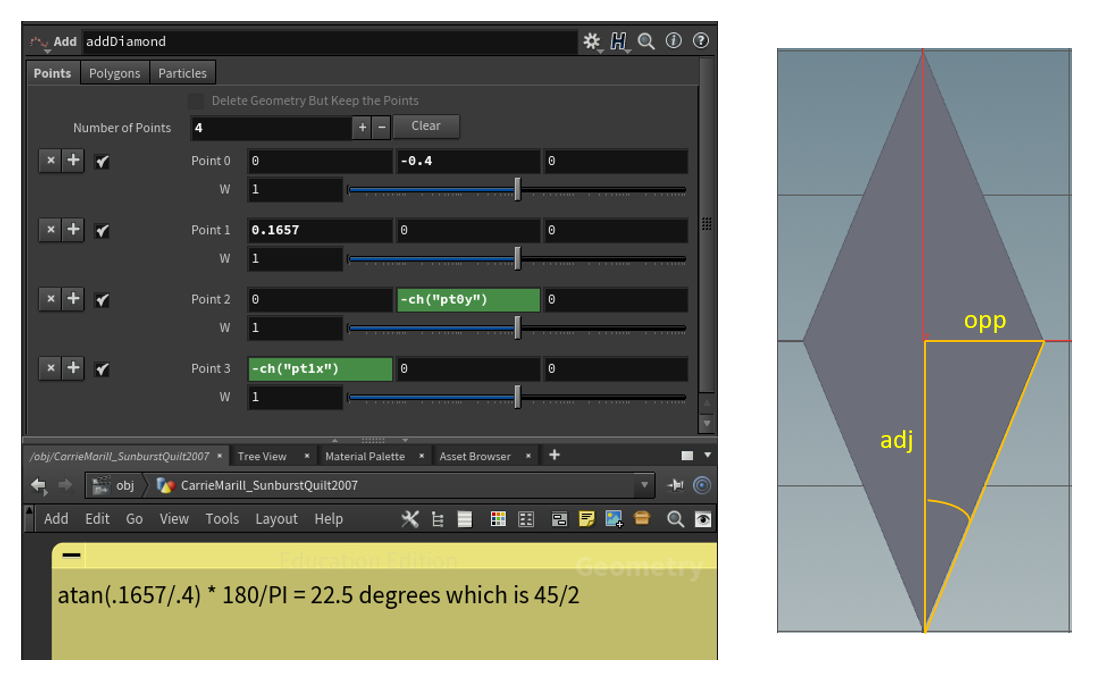
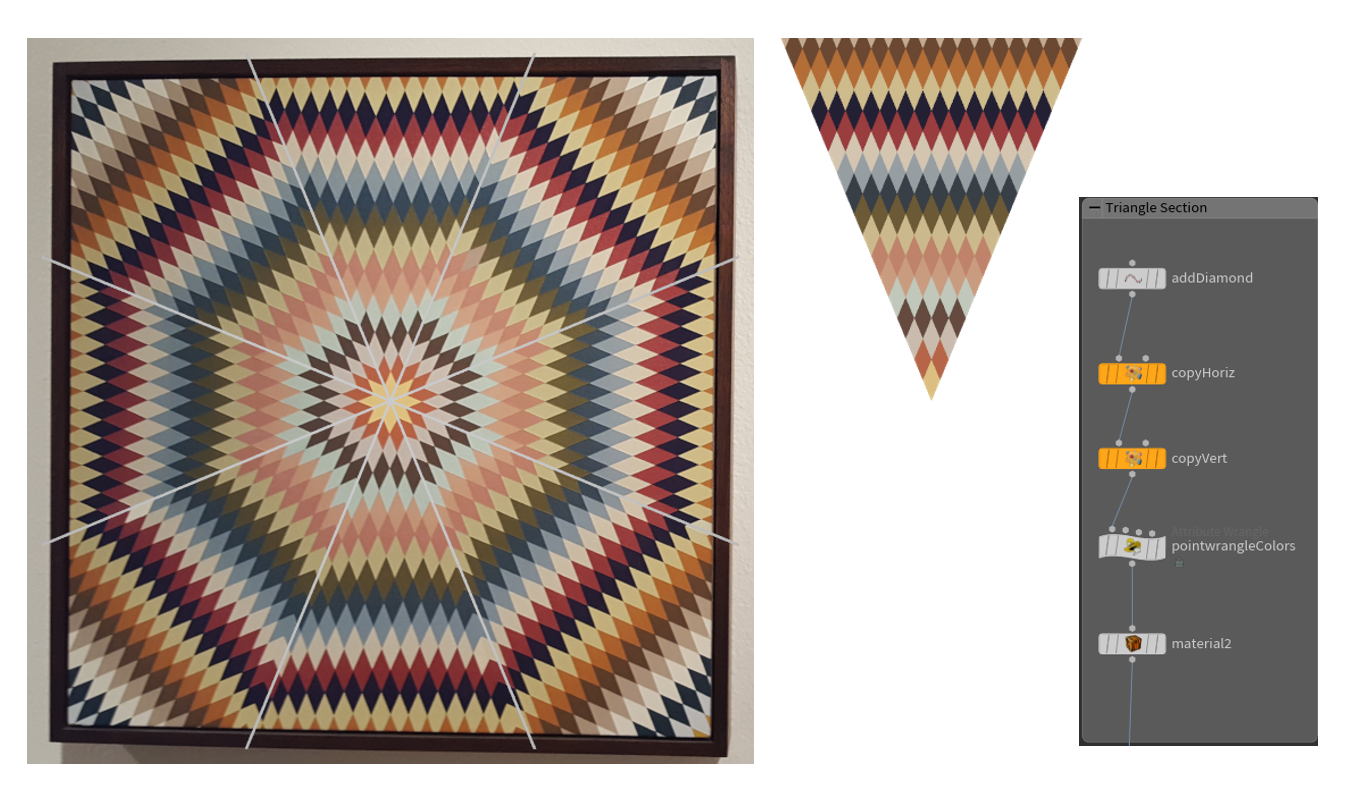 The key to the solution is to break it down to one modular piece,
since it is an octagon 360/8 = 45 degrees.
The key to the solution is to break it down to one modular piece,
since it is an octagon 360/8 = 45 degrees.
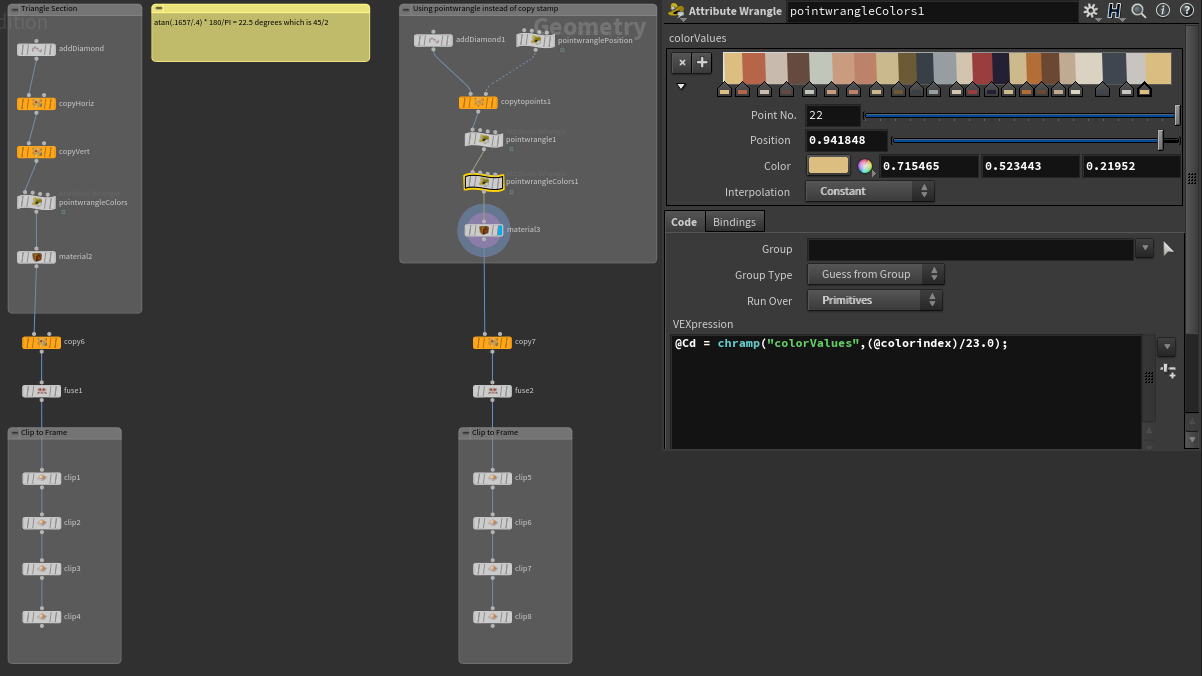
 Copying this piece and fusing the points to reduce redundancy we get
the image below. (copy the single piece 8 times at 45 degrees). To
more closely resemble the original, using four clip nodes.
If you prefer not to use copy stamp nodes, this can be easily
implemented using point wrangle nodes:
Copying this piece and fusing the points to reduce redundancy we get
the image below. (copy the single piece 8 times at 45 degrees). To
more closely resemble the original, using four clip nodes.
If you prefer not to use copy stamp nodes, this can be easily
implemented using point wrangle nodes:
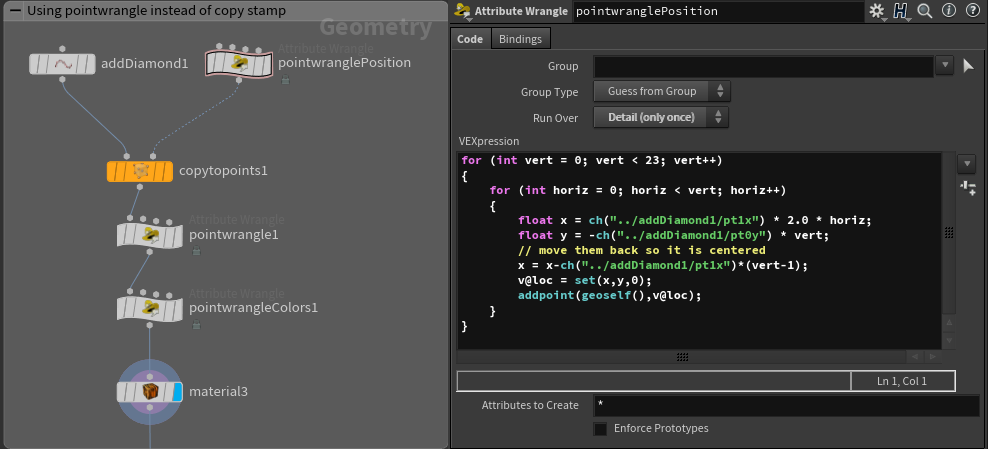 Either method will work:
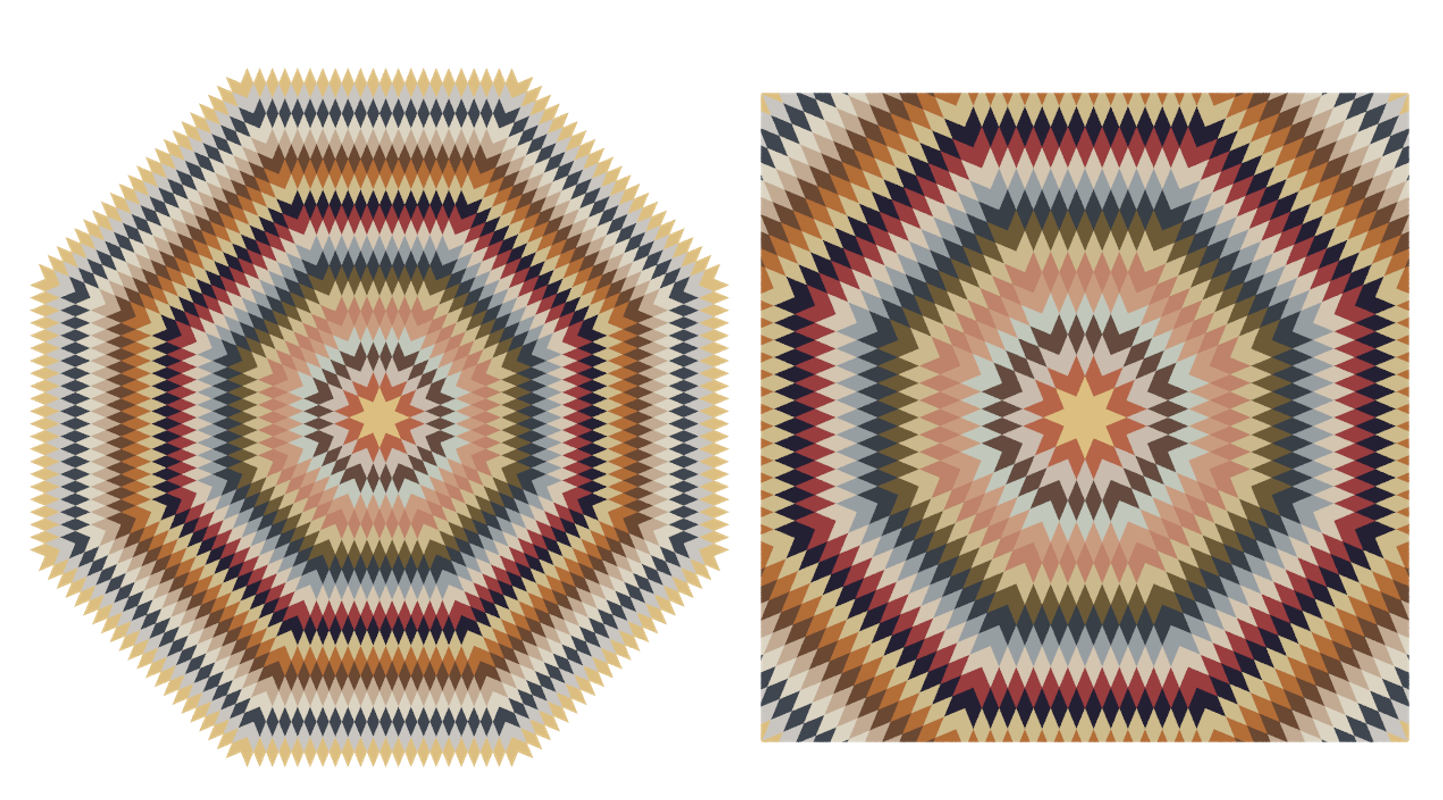 However I was disappointed at the very rigidly perfect result as
compared with the original artwork. I began searching further into
this pattern and found that it was originally created circa 1830s.
https://en.wikipedia.org/wiki/Rebecca_Scattergood_Savery
The one pictured on the website above as well as one on google
search (unattributed pinterest)
do not have the same amount of stretching and are closer to the
mathematically accurate version produced above.
However I was disappointed at the very rigidly perfect result as
compared with the original artwork. I began searching further into
this pattern and found that it was originally created circa 1830s.
https://en.wikipedia.org/wiki/Rebecca_Scattergood_Savery
The one pictured on the website above as well as one on google
search (unattributed pinterest)
do not have the same amount of stretching and are closer to the
mathematically accurate version produced above.
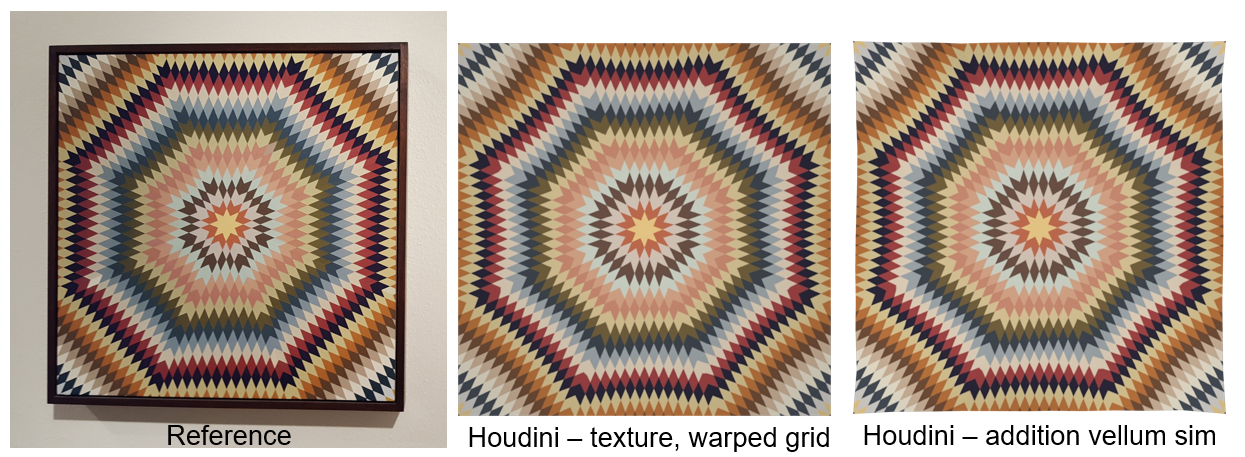
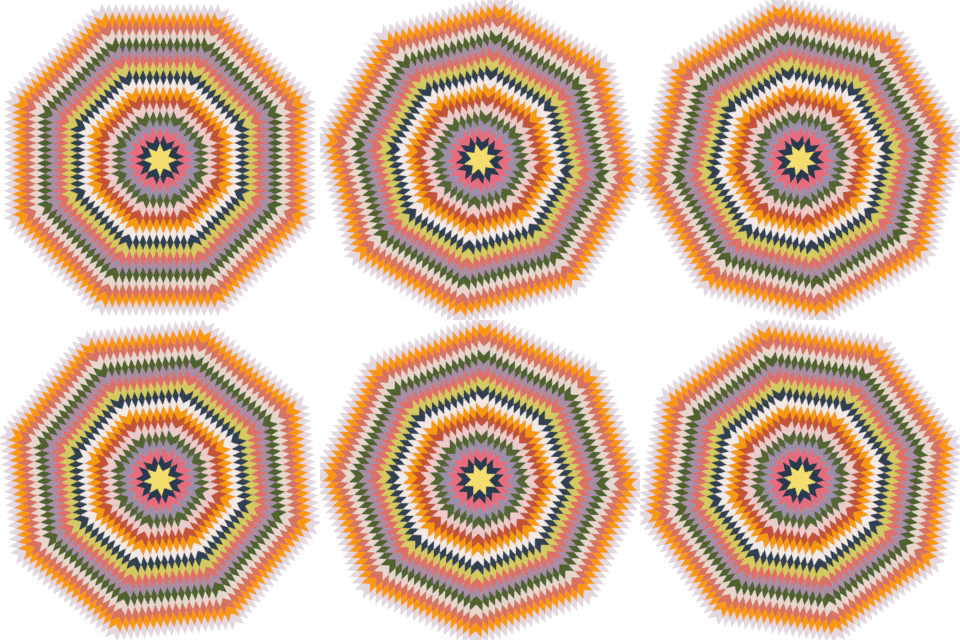
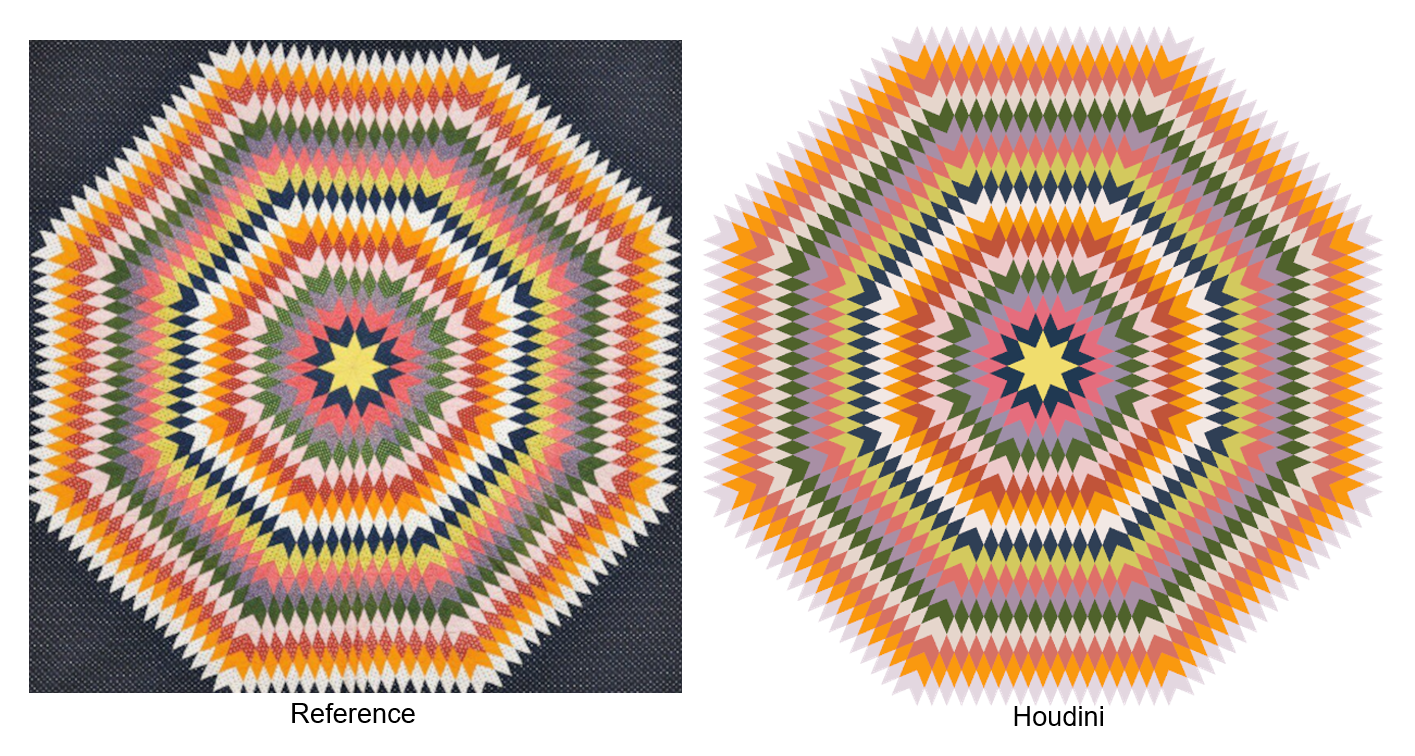 However, to get closer to the original, which I assume has a more
organic form due to the linen stretching or other structural
imperfections that are appealing, I took my existing pattern and
textured a grid that could be manipulated more easily.
However, to get closer to the original, which I assume has a more
organic form due to the linen stretching or other structural
imperfections that are appealing, I took my existing pattern and
textured a grid that could be manipulated more easily.
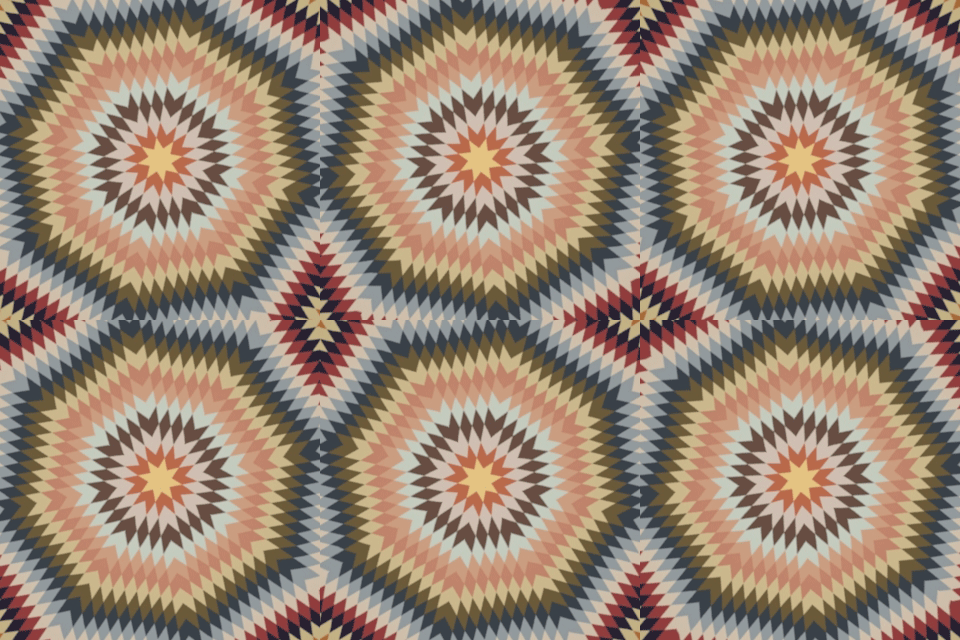
 And since we are in Houdini, fun to try spinning these (not likely
something done with quilts)
And since we are in Houdini, fun to try spinning these (not likely
something done with quilts)
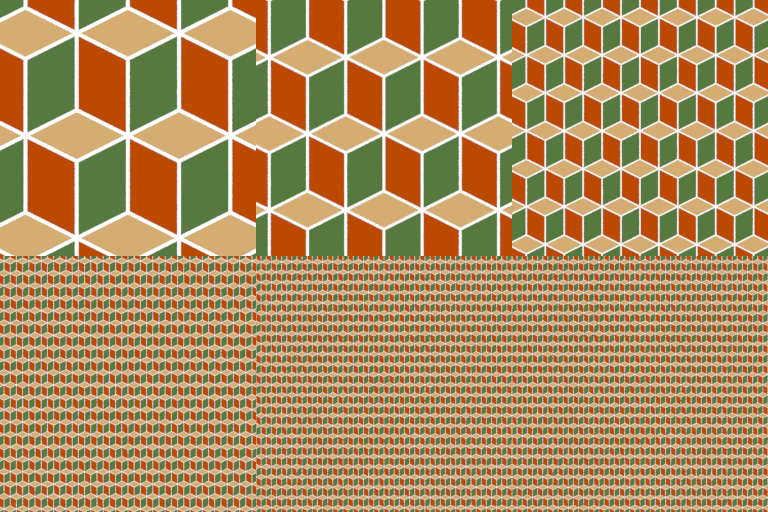
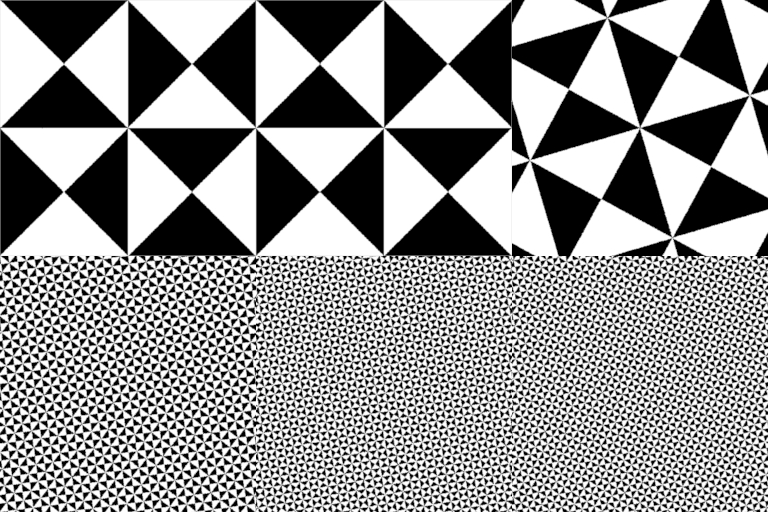
 In addition to the sunburst pattern, there are many other patterns
that are use in quilting.
Here are a few that are titled as follows: blocks, dutchman, flying
geese and bow ties.
In addition to the sunburst pattern, there are many other patterns
that are use in quilting.
Here are a few that are titled as follows: blocks, dutchman, flying
geese and bow ties.


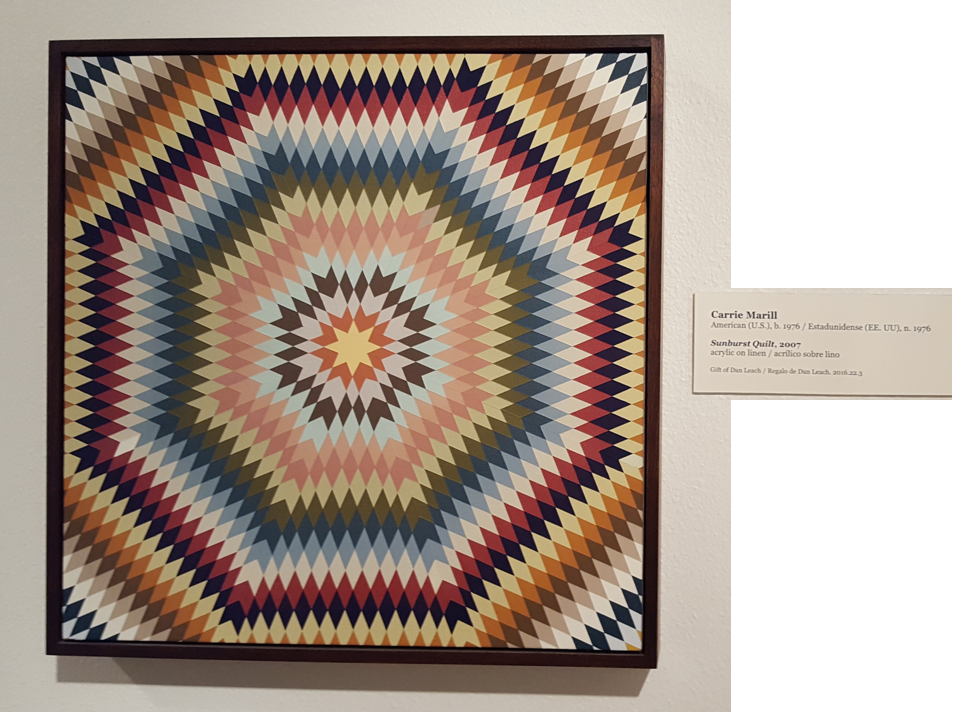
The quilt in the picture below is by Carrie Marill and is titled "Sunburst Quilt" 2007.
 The key to the solution is to break it down to one modular piece,
since it is an octagon 360/8 = 45 degrees.
Copying this piece and fusing the points to reduce redundancy we get
the image below. (copy the single piece 8 times at 45 degrees). To
more closely resemble the original, using four clip nodes.
If you prefer not to use copy stamp nodes, this can be easily
implemented using point wrangle nodes:
Either method will work:
However I was disappointed at the very rigidly perfect result as
compared with the original artwork. I began searching further into
this pattern and found that it was originally created circa 1830s.
https://en.wikipedia.org/wiki/Rebecca_Scattergood_Savery
The one pictured on the website above as well as one on google
search (unattributed pinterest)
do not have the same amount of stretching and are closer to the
mathematically accurate version produced above.
However, to get closer to the original, which I assume has a more
organic form due to the linen stretching or other structural
imperfections that are appealing, I took my existing pattern and
textured a grid that could be manipulated more easily.
And since we are in Houdini, fun to try spinning these (not likely
something done with quilts)
The key to the solution is to break it down to one modular piece,
since it is an octagon 360/8 = 45 degrees.
Copying this piece and fusing the points to reduce redundancy we get
the image below. (copy the single piece 8 times at 45 degrees). To
more closely resemble the original, using four clip nodes.
If you prefer not to use copy stamp nodes, this can be easily
implemented using point wrangle nodes:
Either method will work:
However I was disappointed at the very rigidly perfect result as
compared with the original artwork. I began searching further into
this pattern and found that it was originally created circa 1830s.
https://en.wikipedia.org/wiki/Rebecca_Scattergood_Savery
The one pictured on the website above as well as one on google
search (unattributed pinterest)
do not have the same amount of stretching and are closer to the
mathematically accurate version produced above.
However, to get closer to the original, which I assume has a more
organic form due to the linen stretching or other structural
imperfections that are appealing, I took my existing pattern and
textured a grid that could be manipulated more easily.
And since we are in Houdini, fun to try spinning these (not likely
something done with quilts)